
ai
Our Platform
Say goodbye to trial-and-error and unleash the full potential of deep neural networks without the hassle.

HOW IT WORKS
Maximum Generalization with less data
Neural networks have proven their proficiency in handling both linear and nonlinear data, yet a common challenge is the demand for an extensive and diverse training dataset for real-world applications.
Most learning machines rely on a substantial volume of representative examples to grasp the underlying structure and generalize effectively. That’s where Xdeep excels. Our innovative approach leverages the power of deep neural networks to achieve maximum generalization with minimal data. By intelligently finding the minimum required architecture to model complex phenomena, Xdeep can operate with as little as 1/10th of the typical training data, while simultaneously producing models of minimal complexity.
This not only saves resources but also enhances the model’s ability to generalize to new cases, making Xdeep the ideal solution for efficient and effective AI applications.
Most learning machines rely on a substantial volume of representative examples to grasp the underlying structure and generalize effectively. That’s where Xdeep excels. Our innovative approach leverages the power of deep neural networks to achieve maximum generalization with minimal data. By intelligently finding the minimum required architecture to model complex phenomena, Xdeep can operate with as little as 1/10th of the typical training data, while simultaneously producing models of minimal complexity.
This not only saves resources but also enhances the model’s ability to generalize to new cases, making Xdeep the ideal solution for efficient and effective AI applications.

NO ARBITRARY ARCHITECTURE
Problem: The architecture, or topology, of a neural network plays a pivotal role in determining its functionality and performance. An overly complex architecture can hinder generalization and lead to overfitting, affecting the quality of results.
No OVERTRAINING
Problem: Overtraining is a common issue where a machine learning model performs exceptionally well on the training data but fails to generalize effectively to new, unseen data. This leads to a lack of real-world applicability and reduced performance.
No Vanishing gradient
Problem: In deep neural networks with numerous layers, the issue of vanishing gradient can arise. This means that the partial derivative of the loss function approaches zero, hindering the effective backpropagation of error information to the network’s initial layers.
No weight randomization
Problem: Deep learning models require iterative training algorithms and an initial point to begin these iterations. Random weight initialization choices can significantly impact the training process, often requiring multiple attempts to select the optimal starting point.
FREE DOWNLOAD
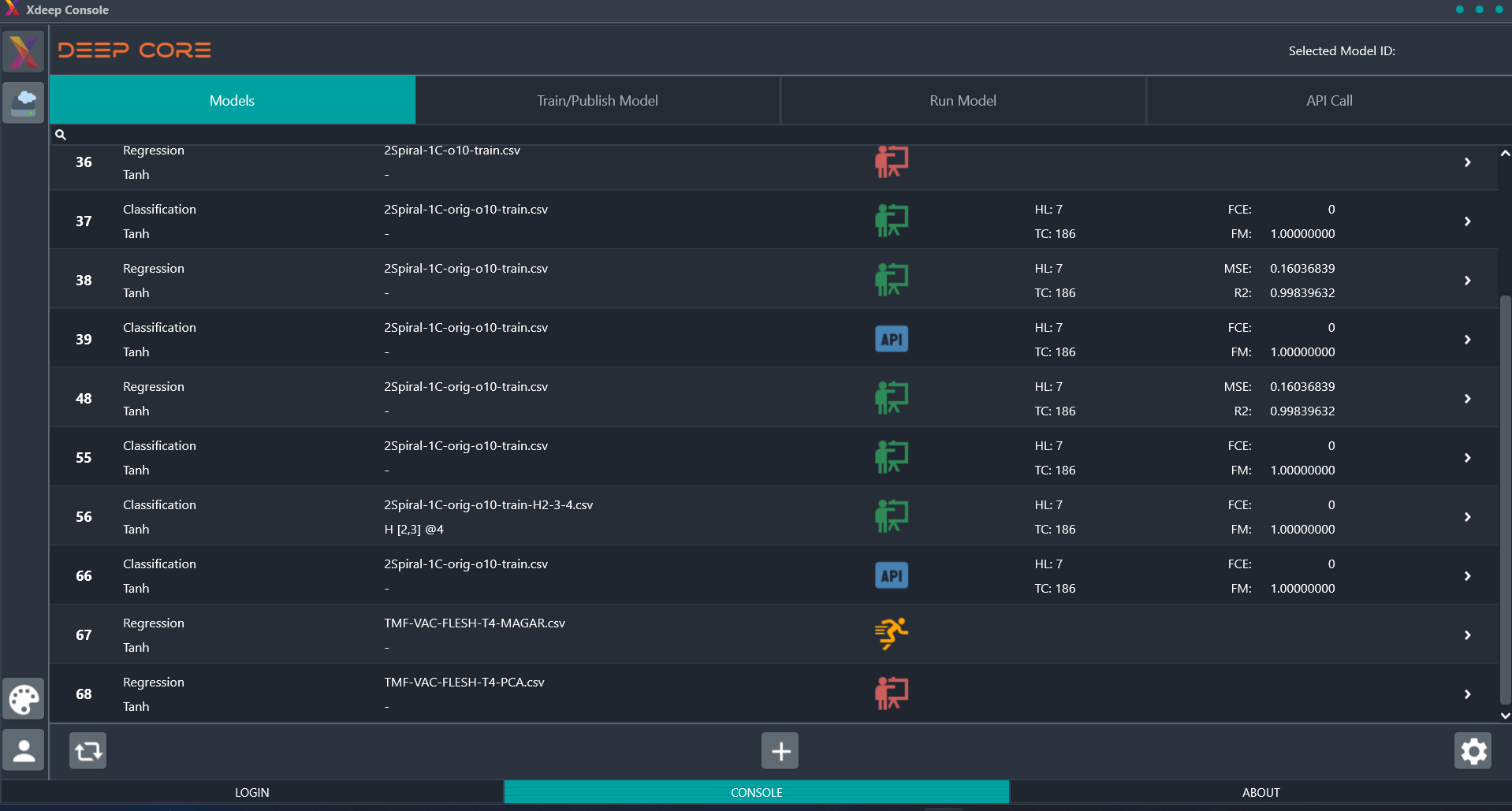
Xdeep Console Application

Create
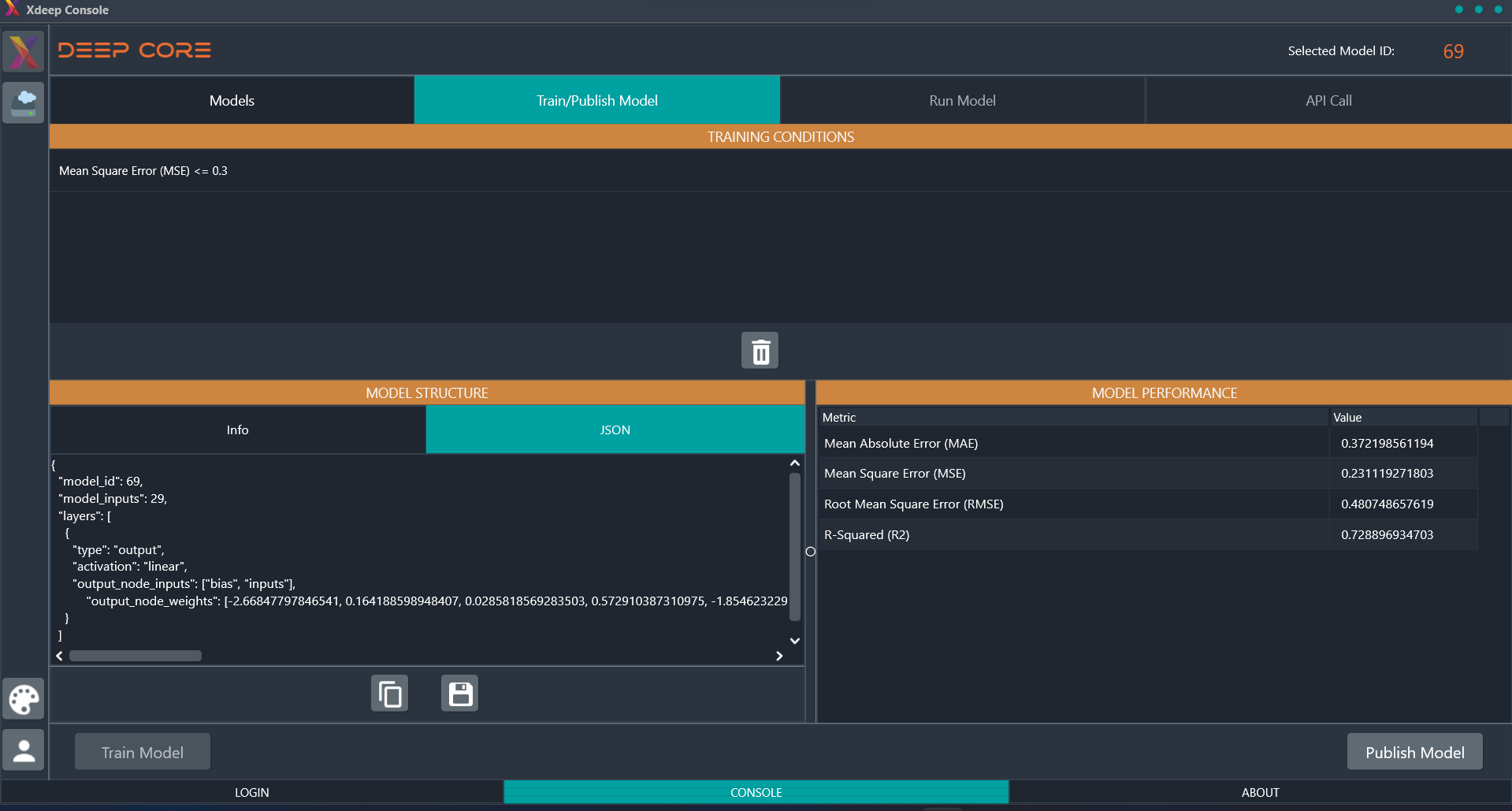
Easily create neural network models for various applications without extensive technical knowledge.

Publish
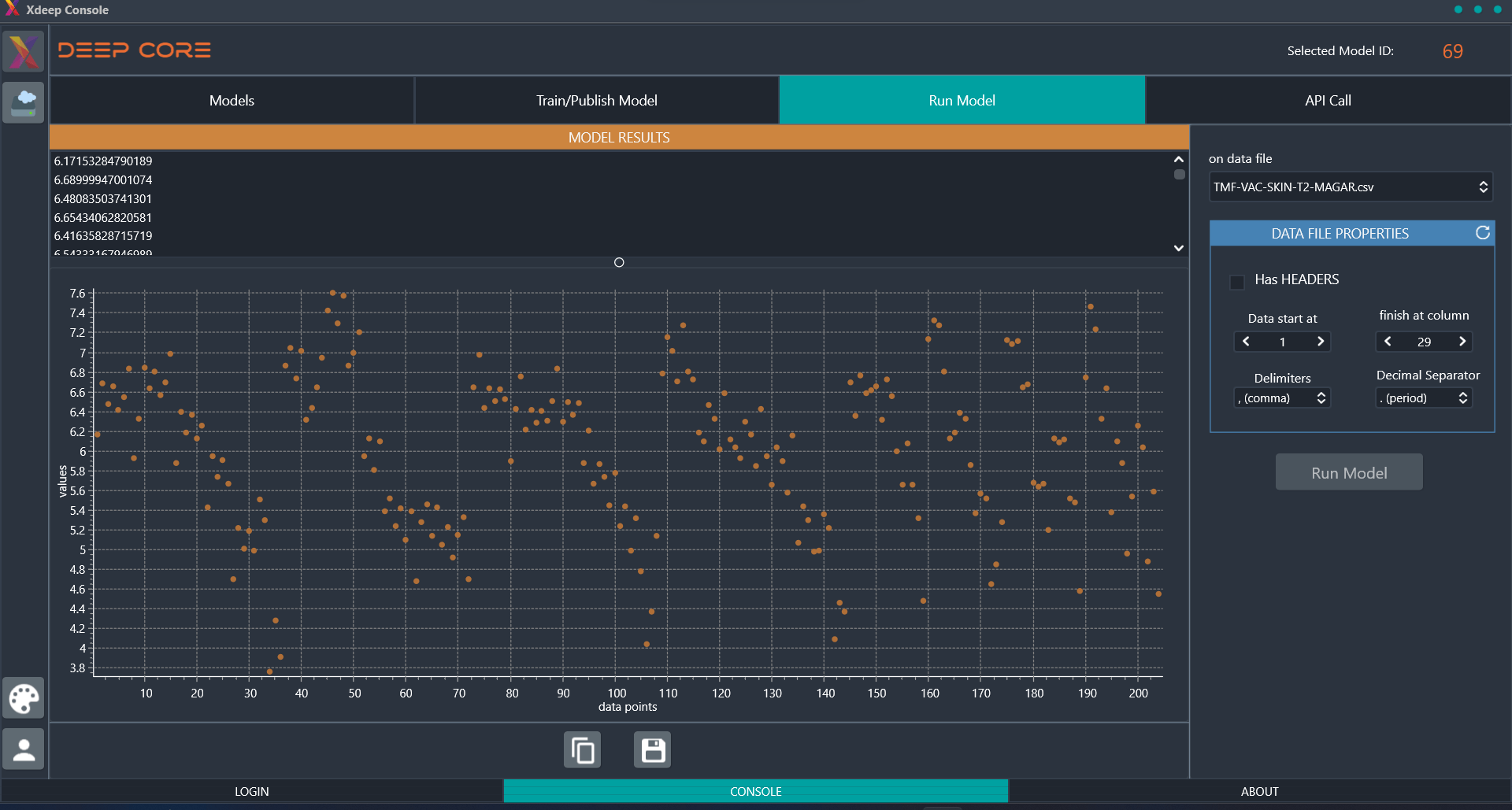
Publish models for execution through the API, making them accessible for real-time predictions.

MONITOR
Elevate your AI experience with instant usage insights—track data points, model executions, and credits.


Ready To Get Started?
Ready to embark on your AI journey with Xdeep? Start with our Free Trial to experience the power of deep learning and neural networks. Sign up today and explore the possibilities of our platform, no strings attached. Unleash your creativity and dive into the world of AI.
